


There’s nothing like floor-to-ceiling glass to pull you straight into a room. Natural light floods in, sunlight glimmers off the pristine glass, the boundary between inside and outside softens, and your landed home suddenly feels twice the size it actually is. Your single design move now treads the line between drama and openness.
But whether you’re going with full height glass doors and windows, a sliding system, or a pivot-style floor-to-ceiling door, full-height glazing is never your standard run-of-the-mill install. Such a statement piece deserves real thought before the first frame even goes up.
Why Floor-to-Ceiling Glass Doors and Windows Work So Well in Landed Homes
Landed properties have plenty of facilities and features that even the most luxe condos don’t. A garden. Maybe a pool. Landscaping worth looking at. Floor-to-ceiling glass turns those outdoor features into a living feature wall so you can admire the fruits of your labour even from inside the house.
The taller ceilings common in landed homes also make full-height glazing feel proportionally right rather than oversized for the space. That’s how you get the seamless indoor-outdoor flow that’s become a signature of contemporary Singapore home design, plus all that natural light means you’ll lean far less on artificial lighting during the day.
Windows or Doors: Which Is Right for Your Space?
However, not every full-height glass opening needs to open. There are several options to consider:
- Full-height floor-to-ceiling windows suit spots where light and views matter but access doesn’t: living room feature walls, stairwells, facades.
- Sliding full-height glass doors are the natural choice when a space connects directly to a garden, patio, or pool deck.
- Pivot floor-to-ceiling doors bring architectural weight to a main entrance, or work beautifully as interior room dividers or as bedroom windows and doors.
It comes down to function, traffic flow, and design intent. The right configuration is the one that works the way you actually live.
Key Considerations Before You Commit
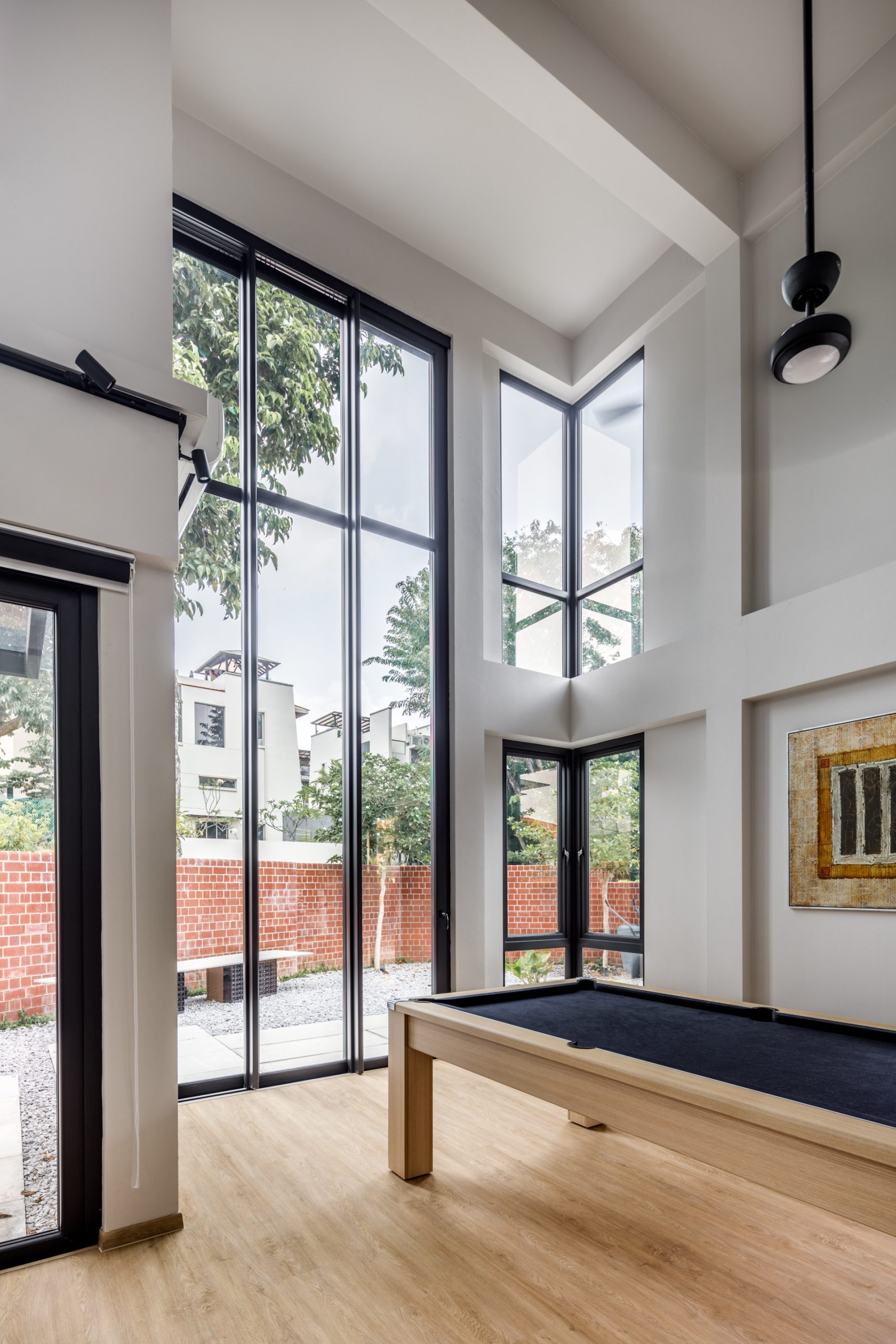
A few things worth getting right before you commit to floor-to-ceiling glazing:
- Structural requirements: Full-height openings need proper structural support, planned at the build or major renovation stage. Not retrofitted later.
- Privacy: Glass works in both directions. Consider orientation, neighbouring sightlines, and whether frosted, tinted, or strategically placed glazing makes more sense for added home security. Laminated glass can help with soundproofing too, protecting you from the non-stop droning of construction noise that Singapore’s known for.
- Heat and glare: Singapore’s climate is unforgiving. Large glass surfaces can drive indoor temperatures up fast, which is where solar control coatings, Low-E glass, and the right double glazing specifications earn their keep.
- Floor-to-ceiling height: Confirm your supplier can actually fabricate and install at the dimensions you need. Not every system goes that tall.
Make a Statement That Lasts
Floor-to-ceiling glass is a long-term architectural decision. The specification you settle on now will shape how the home looks, feels, and performs for decades.
When it comes to floor-to-ceiling windows in Singapore, architects, contractors, and homeowners turn to Sapphire Windows. As a manufacturer and glass door contractor in Singapore, we build bespoke full-height window and door systems that span up to 6 metres, designed for our climate, and finished to last.
If your next build or renovation calls for full-height glazing done properly, speak to the Sapphire Windows team before the design is locked in.