


Sliding doors show up in every renovation photo you have saved. They look clean. They look minimal. They open up to beautiful, unobstructed views of manicured lawns and rolling hills. What those photos do not tell you is whether these doors hold up to Singapore’s heat, humidity, noise, and daily wear once the camera is gone.
This guide weighs the genuine pros and cons of sliding doors, so you can decide whether one belongs in your home rather than just your mood board.
What Sliding Doors Do Well
Sliding doors are popular in Singapore for good reason. A sliding door needs no swing radius. That single fact makes it the practical choice for smaller rooms, balconies, and anywhere floor space is already tight. Nothing blocks the way in or out, and no swinging door competes with your furniture for space.
The large glass panels do real work too. Natural light reaches deeper into the room, and you can enjoy an unobstructed view of your garden or pool.
They also work on simpler mechanical principles. With fewer moving parts than folding sliding doors or casement windows, there is less that can go wrong when operating them or maintaining them.
Where Sliding Doors Fall Short
However, that convenience comes with trade-offs worth knowing before you commit:
- Access: With a standard two-panel slider, one panel always stays fixed, so only half the opening is ever usable at any one time. If you need the doors fully open because you are entertaining guests or simply enjoy uninterrupted airflow, keep this in mind.
- Tracks: Singapore’s tropical conditions mean dust and grit collect quickly in the window grooves, and a track left uncleaned will affect glide quality within a year or two.
- Sealing: A well-made sliding door seals tightly. A budget one does not, and the gaps show up as noise, heat, and humidity finding their way in, which is exactly where specification counts.
Noise and Heat, the Two Concerns That Matter Most in Singapore
For a landed home in Singapore with a busy intersection next door, or when the neighbours inevitably decide to renovate, soundproof windows and doors are not a luxury. They are the difference between a bedroom that stays quiet and calling the helpline to report neighbourhood noise.
Double glazing and properly fitted compression seals close most of the gap between a sliding door and a solid wall. The frame material and seal quality matter as much as the glass itself. Budget aluminium frames tend to underperform on both fronts, since thinner profiles conduct more heat and do not seal as reliably as a purpose-built system.
Is a Sliding Door Worth It for Your Home?
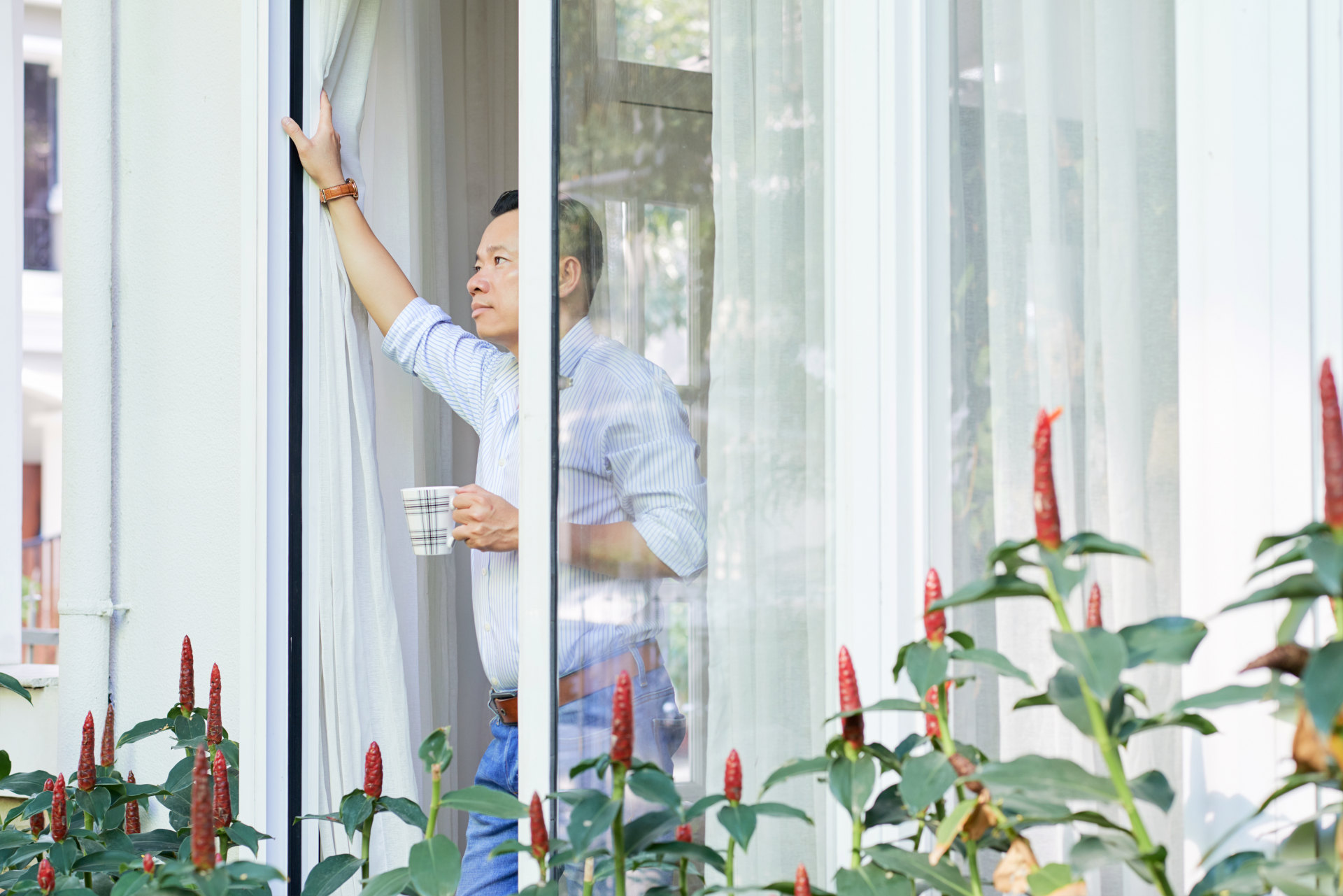
It is worth it if the opening faces a view or garden worth showing off, space is limited, and you are committed to installing a quality set of doors with proper glazing and seals. When budgeting, it helps to know the cost of replacing sliding doors before comparing quotes across systems.
It is also worth reconsidering whether the room needs full-width access regularly. In that case, a folding sliding door may be a better fit. It stacks fully open, so the entire width becomes usable, which a standard slider cannot offer. On the other hand, if noise insulation is a priority, budgeting for soundproofing would be a more sensible choice.
Choosing a Sliding Door System with Sapphire Windows
A quality sliding glass door in Singapore earns its place in most homes, as long as the glazing and seals suit the room. Sapphire Windows can help match the glazing, frame, and hardware to your home’s actual conditions rather than a generic specification. Contact the Sapphire Windows team to discuss which sliding, or folding sliding, system suits your space.