


Humid nights and stagnant air are common complaints in Singapore bedrooms. In most cases, homeowners default to the air conditioner, installing a more powerful unit or simply leaving it on all day. They rarely question the windows.
Even then, they sometimes wrongly blame poor airflow on the window type, weighing up sizes and panels. The focus should be on how they work. Opening percentage, direction, and configuration are key factors that determine how much genuine airflow a bedroom actually gets. This guide covers what drives airflow in a bedroom, and how to configure a bedroom window, whatever type is already installed or being chosen, for better sleep.
Why Airflow Matters More Than Most Homeowners Realise
Poor ventilation does more than make a room feel stuffy. Trapped heat, rising humidity, and a build-up of carbon dioxide lead to sleepless nights spent tossing and turning. It is difficult to rest in a bedroom where the air is not circulating properly, no matter how good the air conditioning is.
Many turn to constant air conditioning to feel a little more comfortable. However, this dries out the air, adds to the monthly bill, and may not even solve the fundamental problem of poor ventilation.
Cross ventilation is the real solution. This means ensuring air moves in from one side of the room and out the other, which works because it relies on a pressure difference, not just an opening. Air enters through a window on the windward side and leaves through one on the leeward side, and that pressure gradient keeps air moving continuously through the room rather than drifting near a single window. This natural ventilation reduces how much the room depends on mechanical cooling.
What Actually Determines How Much Airflow a Window Lets In
Three factors decide how much air a window lets through.
- Opening Percentage: A sliding window exposes roughly half its frame at any one time, since one panel always sits behind the other. Casement and awning windows can open to the full width of the frame, so more of the opening is available for air to pass through.
- Direction: An outward-swinging casement or awning panel can catch a breeze and direct it into the room, rather than simply allowing air to pass through an opening that happens to be there.
- Sealing: This matters when airflow is not the priority. A tighter seal keeps out noise and humidity when the window is shut, and for those who like air conditioning, it keeps the cold air in.
No single window type is inherently the better choice. The right configuration for a specific room and its orientation matters more than the type of window installed.
Configuring Windows for Better Airflow in a Singapore Bedroom
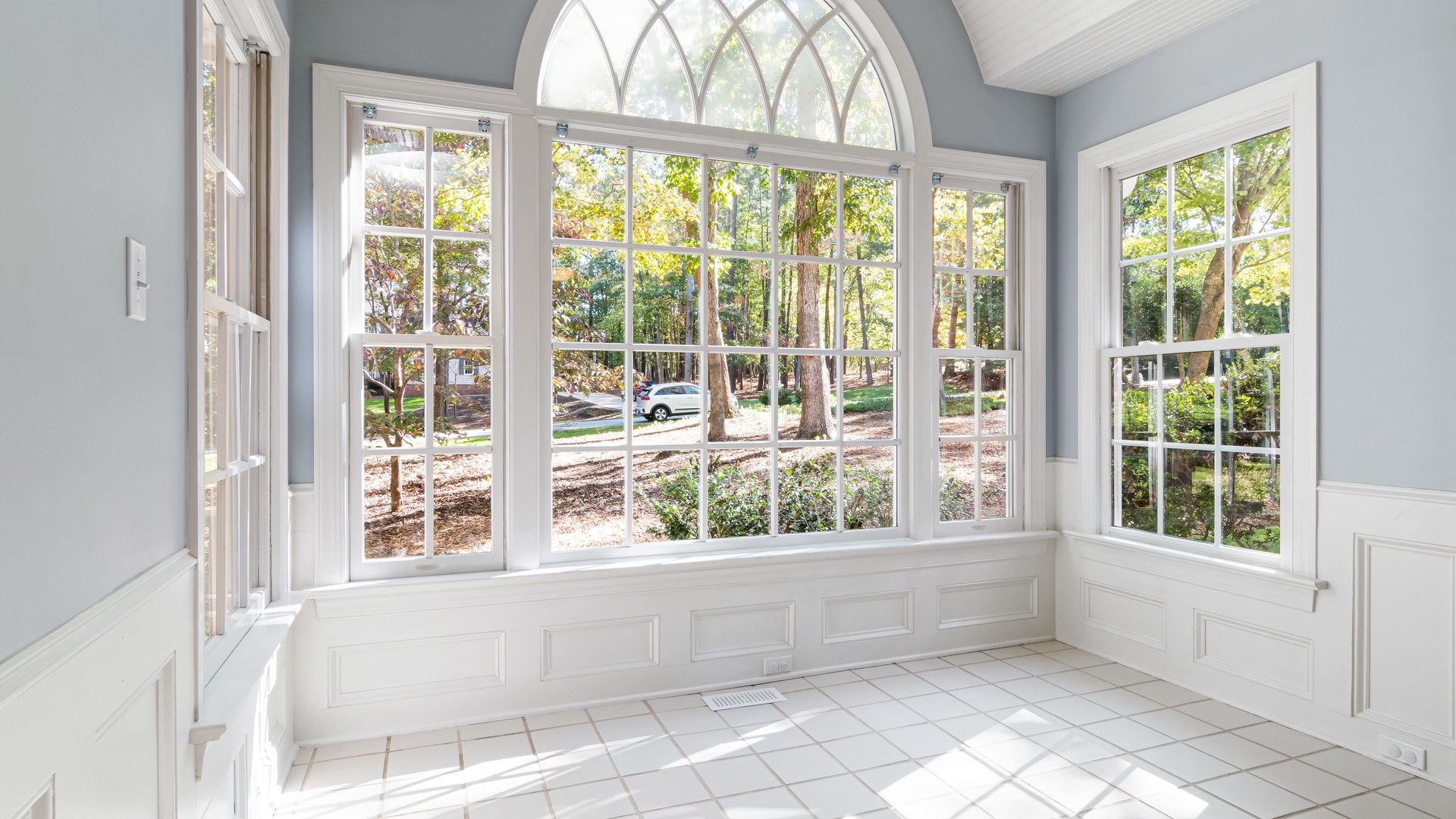
Getting more airflow out of a bedroom window is mostly a matter of configuration.
Cross ventilation needs somewhere for air to flow to, so pairing the main window with an opening on an opposite or adjacent wall makes the biggest difference. A single window, however well specified, can only do so much on its own.
A top-hung awning panel alongside the main window keeps the room ventilated during rain, often exactly when ventilation is needed most and a full window cannot safely stay open.
Orientation matters too. Singapore’s prevailing wind runs generally north-easterly from December to March and south-westerly from June to September. Where the layout allows, position openings in that direction to improve airflow without changing the window itself.
Glazing still plays a role. Laminated glass or double-glazed windows in Singapore keep noise and heat out when closed, without affecting how much air moves through when the window is open.
Design Your Bedroom for Comfort with Sapphire Windows
Better sleep in a Singapore bedroom comes down to getting the opening design, direction, and configuration right for that room, not choosing whichever window type is assumed to be universally superior.
If you find your rooms stuffy no matter how low the air conditioning is, your window position is worth a second look. Casement windows with the wrong orientation underperform well-placed sliding windows, and the reverse is equally true.
Sapphire Windows works with homeowners to choose and configure the right system, whether casement, sliding, or otherwise, for how a bedroom needs to breathe. Contact the Sapphire Windows team to discuss window configuration before your renovation begins.